For sales and support visit:
hubbellpowersystems.com/contact/

Description

Application

The primary purpose of any cutout is to provide protection to the lines of your system and the various apparatus on those lines such as transformers and capacitor banks. Hubbell Type C-Polymer cutouts provide reliable protection from low-level overloads that just melt the fuse link, intermediate faults, and very high faults, through maximum interrupt rating.e

In addition, Type C-Polymer cutouts can also be used as a sectionalizing device. With the use of a portable loadbreak tool, Type C-Polymer cutouts can function much like an overhead disconnect switch. A 300 amp disconnect blade is also available for this purpose.

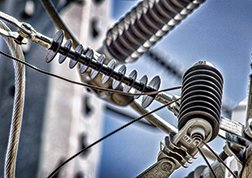
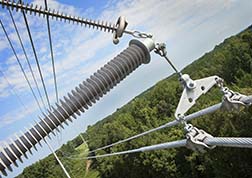
Polymer Insulators

Type C-Polymer cutout insulators are manufactured with ESP™ silicone alloy rubber, the same material used in Ohio Brass PDV arresters and Hi*Lite insulators. ESP is a polymer compound made by alloying silicone and EPDM rubber. This alloy offers the desirable toughness and resistance to tracking of our original EPR, with the hydrophobic characteristics derived from low molecular weight silicone oils

Hubbell Power Systems uses several tests to evaluate materials. Tracking, QUV, corona cutting, salt fog, oxidative stability and variations of differential thermal analysis tests confirm the quality of the material. For further information on our polymers, ask your Hubbell Power Systems representative for the publication "Polymer Materials for Insulator Weathersheds" EU1264-H.

Upgrades to Cutout Performance

The increased metal-to-metal leakage distance of Type C-Polymer Cutouts compares to their porcelain counterparts at 12.6" (319 mm) vs 8.7" (220 mm) for 15kV and 17.1" (434 mm) vs 12.6" (319 mm) for 27kV.

Significantly lighter, Type C-Polymer Cutouts typically weigh only approximately half their porcelain counterparts. This ergonomic advantage makes them simple to install and, of course, far less fragile than porcelain. That means reduced or eliminated losses from routine shipping, storage and handling.

Quality Construction


Efficient Current Transfer

The Type C-Polymer cutout has an all copper current path. All contacts are silver-plated. Terminals are tin-plated bronze for use with copper or aluminum conductors.

Loadbreak Hooks

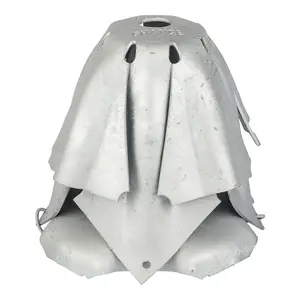
Galvanized steel hooks are standard on all Type C cutouts, except the arc chute version, for use with a portable loadbreak tool. These sturdy hooks are mounted on the top support and serve to guide the fuseholder into the latch socket.

Top Contact

The top contact is attached to the galvanized-steel hood by a stainless rivet to provide a smooth self-aligning action during closing even in severely corrosive environments. The top contact provides a sockettype cavity for latching the fuseholder and prevents any possible "over-travel" of the fuseholder. The top contact is made of a highly conductive copper strip with silver-plated embossments for efficient current transfer. The contacts are held under constant pressure designed to maintain firm contact with the fuseholder contact surface until fault interruption is accomplished

Hinge

The hinge on the Type C-Polymer cutout employs large pivot areas for the fuseholder's trunnion and is cast of a copper alloy chosen for its strength and corrosion resistance. The hinge contacts are highly conductive copper alloy stampings and are plated to assure low resistance current transfer from the trunnion casting. The parallel current paths are backed up by high strength cantilever springs and are riveted to the hinge castings. Fuseholder can be dropped into place and easily lifted up and out. No tricky maneuvering is required.

Fuseholders

The solid cap on the single vent fuseholder is a copper alloy, silver-plated to provide efficient current transfer. An integral ring is provided in the top tube casting for opening and closing the fuseholder with an appropriate disconnect tool from the ground, from a bucket truck or from the pole.

The toggle type trunnion is a selective silver-plated bronze casting for efficient current transfer to the lower hinge contacts. A cam shaped projection on each side of the trunnion casting provides high pressure parallel current paths to the lower contacts. These projections, or pivot pins, are cast full round for smooth rotational operation in the hinge. The link ejector assists in arc interruption during low fault current or excessive overload conditions. A groove in the center of the link ejector allows the fuse link's pigtail to go directly from the fuse tube to the attachment nut. A curved ejector minimizes bending stresses in the pigtail to prevent broken strands. A stainless steel torsion spring on the link ejector helps to rapidly eject the link from the bore of the fuseholder during interruption. The 200 amp link ejector has a wider groove area and increased spring force to accommodate the larger links

The link ejector is pinned to the trunnion casting with a stainless steel pin to provide resistance to corrosive elements and provide smooth pivotal action. An interlocking feature between the link ejector and tube casting prevents excessive tension on the fuse link during closure, thereby preventing link breakage.

The link ejector employs a hammer effect to enhance toggle action of the trunnion during low fault and overload interruptions, hence dropout action is enhanced. The link ejector provides sufficient surface area to facilitate re-fusing by linemen wearing gloves.

Ratings/Specifications

STANDARD Type C-Polymer cutouts are maximum design voltage rated to eliminate application and selection confusion. There are no restrictions on application to grounded wye, ungrounded wye, or delta systems having maximum operating voltages (line-to-line) equal to or less than the cutout maximum design voltage rating. (See the LINKBREAK and LOADBREAK cutouts for their specifications.) Interruption tests have been performed at full system line-to-line voltage. 100-amp and 200-amp fuse tubes and 300-amp disconnect blades are available for each voltage class. They all fit into a common mounting assembly rated at 300 amps continuous.

Hubbell Power Systems All contents Copyright© 2001 - Hubbell Incorporated. All rights reserved. Because Hubbell has a policy of continuous product improvement, we reserve the right to change design specifications without notice.
Terms of Use | Contact Us | Site Map
Switching